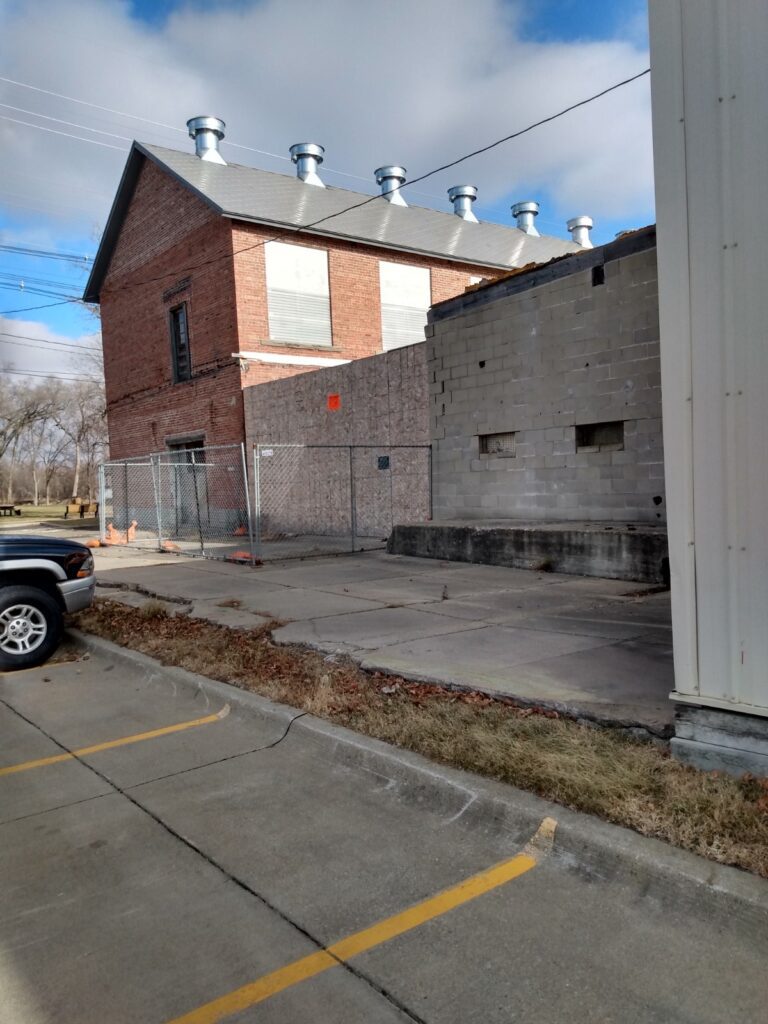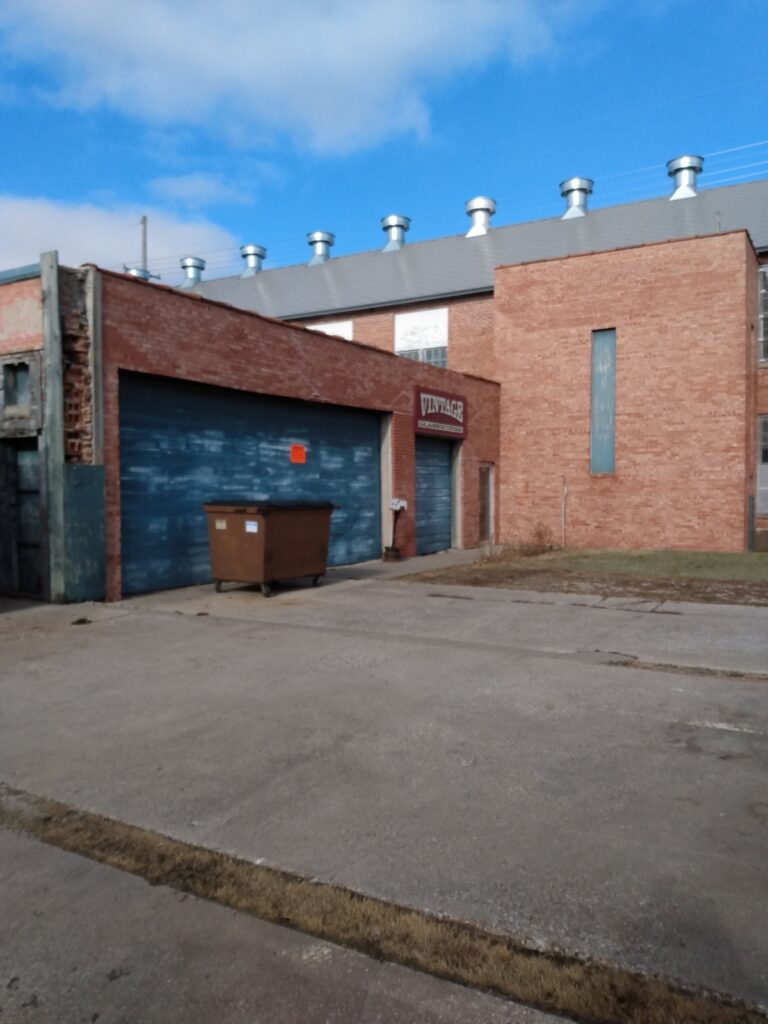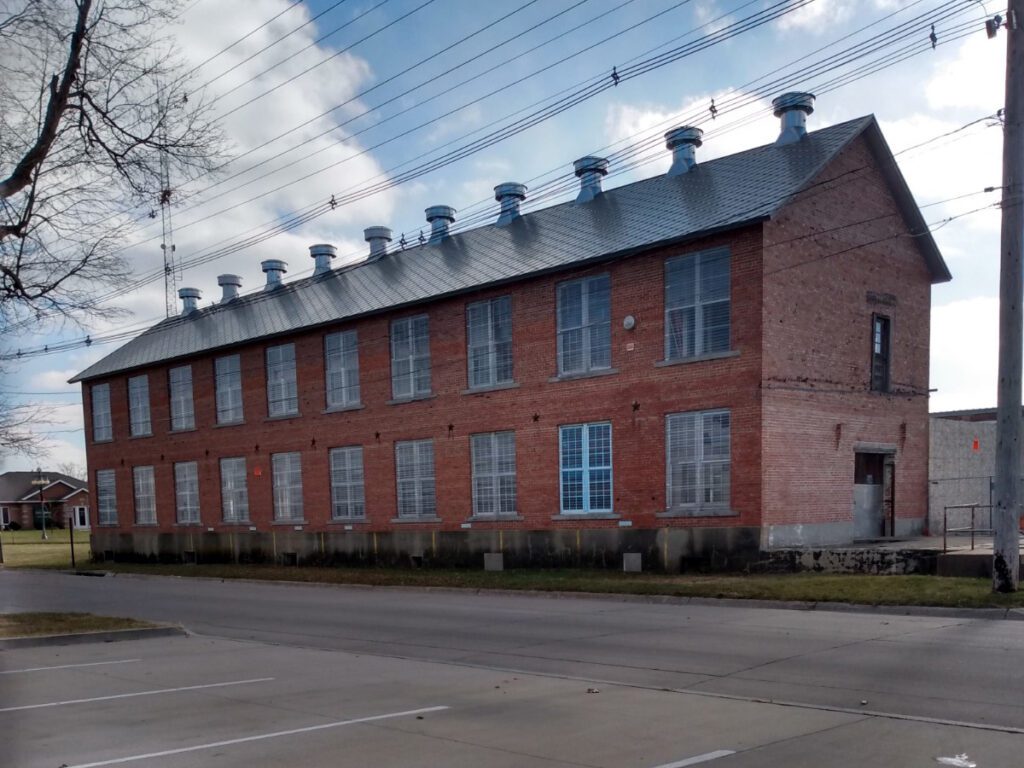
Built c. 1927, the Seed House is the last surviving structure associated with the Iowa Canning Company. Processing mostly sweet corn, it was one of Iowa’s earliest and largest canning operations operating from the late 1800s through the mid-1900s. The company was an important economic contributor to the city of Vinton and surrounding area during this time. At its peak, the operation employed 250 people and produced more than 3 million cans annually. To recognize its value, the community established an annual sweet corn festival in 1929 which was attended by thousands each year.
The Seed House was constructed to handle the drying, conditioning, processing, and storing of seeds for the company’s contract farmers and company-owned farming operations. Evidence of this use remains in the ten pairs of windows on the north and south sides of the building, aerator vents along the roof edge, and rows of nails in the ceiling with shadow marks of circular wire hooks which may have hung suspended strings of multiple corn drying hangers.
The structure retains the original brick and poured concrete foundation as well as many of the original wood frame window sashes and interior wood and concrete floors.
The structure was placed on the National Register of Historic Places in 2012.
In 2008 all of the remaining canning company buildings were inundated with flood water from the nearby Cedar River and subsequently all but the Seed House were demolished. The Seed House also sustained considerable damage from high winds during a derecho in 2011.
A year ago, the current owners were cited by the City of Vinton for numerous nuisance issues related to the building. In response, the owners have worked over the past year to cover the unprotected windows, close ground-level openings, and remove failed roofing and beams. Despite this effort, the City condemned the property in November 2022 and it is currently in danger of being demolished.