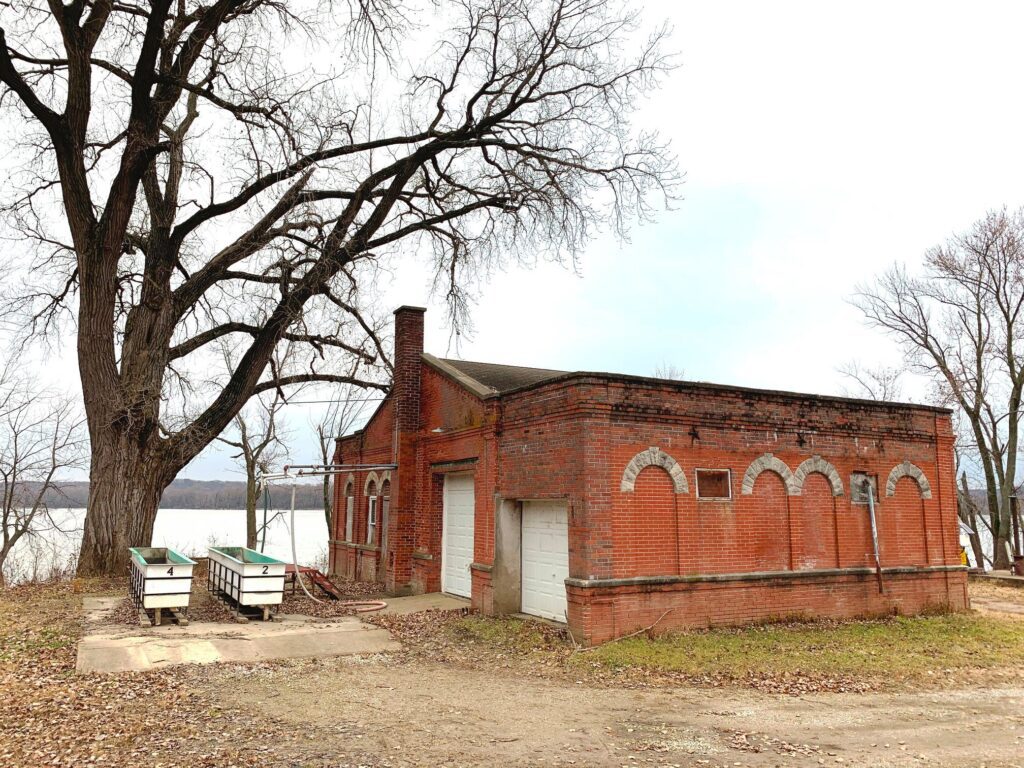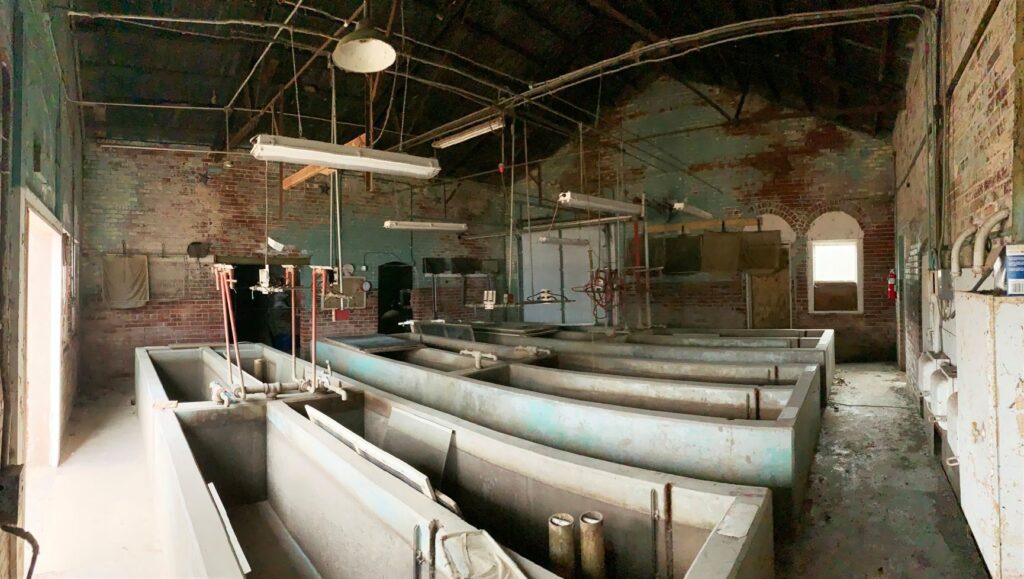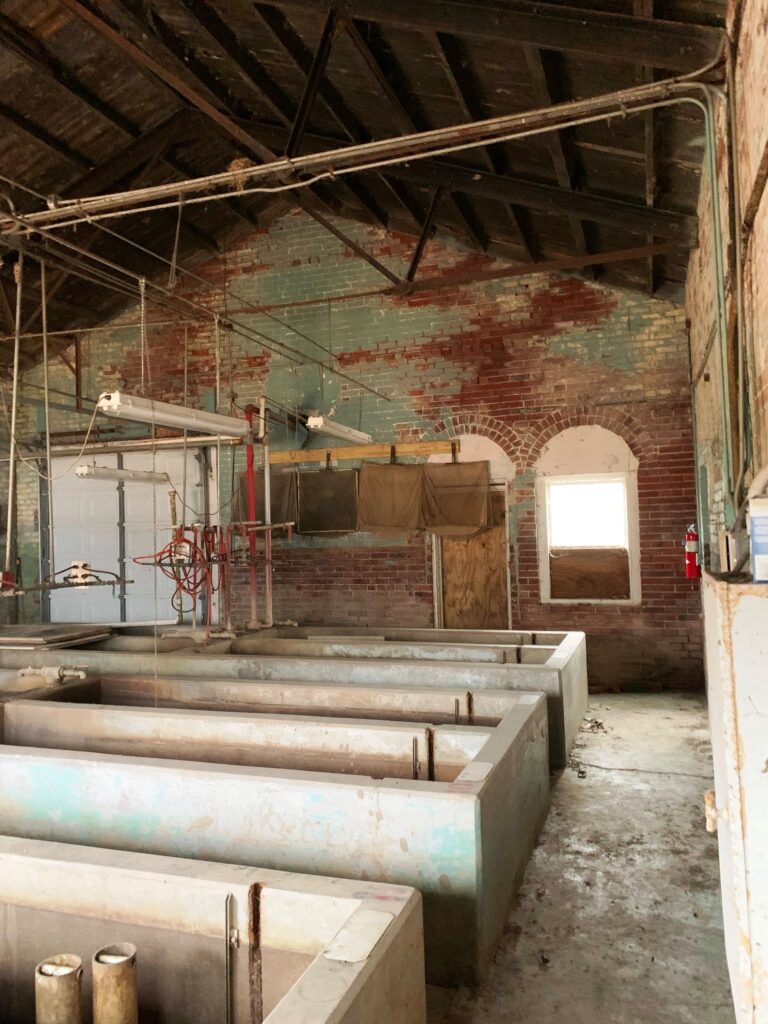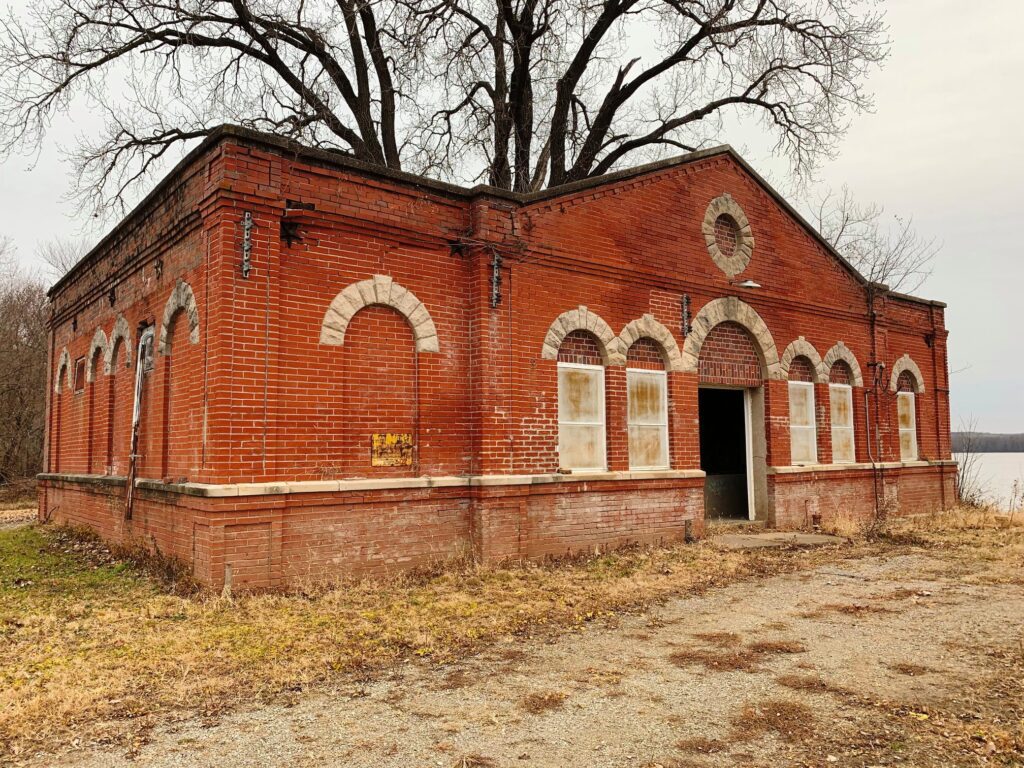
This structure on Highway 22 just east of Fairport is the only research-related structure remaining from an early 1900s federal mussel propagation initiative established to support the cultivation and preservation of the freshwater mussel population which was of economic importance to the region at that time. When the Fairport Station opened in 1914, the Pump House fed 17 earthen ponds and by 1920 there were as many as 36 separate ponds ranging in size from one-tenth of an acre to about an acre in size. Water was pumped from the Mississippi River into reservoirs placed above the ponds and then a gravity system was used to feed the various ponds. During fiscal year 1927, the coal-powered pump in the Pump House impelled 108, 616,000 gallons of unfiltered water and 1,484,805 gallons of filtered water to supply the needs of the station.
In 1929, the station was converted into a fish hatchery and during the 1960s it underwent a major renovation and modernization by the Bureau of Sport Fisheries and Wildlife. When the federal pond stocking program ended in the late 1970s, the fish hatchery became part of the Iowa Department of Natural Resources.
Lack of ongoing maintenance currently threatens the integrity of the Pump House. The foundation is secure despite being frequently inundated with flood waters, however, uncleaned eve troughs have allowed rain water to infiltrate, and this along with freeze and thaw cycles have destabilized some of the walls.
At present the Iowa DNR has slated the Pump House for demolition, however, a new initiative, Mussels of Muscatine, may signal a potential reuse for the Fairport Fish Hatchery and Pump House. The joint program involving the City of Muscatine, National Pearl Button Museum, The Nature Conservancy and the Iowa DNR is an effort to reestablish the mussel population in the Mississippi River with the goal of improving water quality as mussels filter particles and bacteria out of freshwater.