
Property Types
Preservation Iowa focuses on providing information, raising awareness, and protecting property types that hold special significance for Iowans.
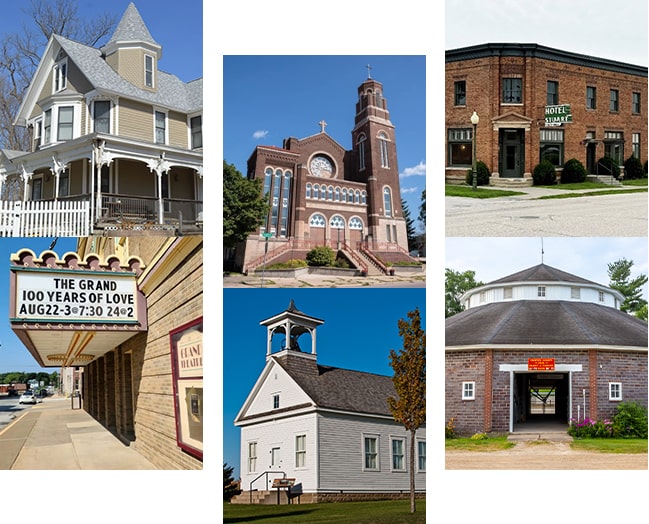
Its efforts encompass a wide range of historic resources, including residential buildings, commercial and industrial structures, sacred places, schools, and movie theaters, as well as rural properties such as farmsteads and barns. By focusing on these diverse property types, Preservation Iowa works to safeguard the architectural heritage and cultural identity that are essential to the state’s history and the character of its communities. Through education, outreach, and support for preservation initiatives, the organization plays a vital role in ensuring that these meaningful places continue to enrich Iowa’s historical and cultural landscape for future generations.
Residential
Residential buildings are found in communities and rural areas throughout Iowa, serving as essential places for individuals and families to live. A residential building is any structure primarily designed and used for human habitation. These buildings can vary widely in size, style, and type, reflecting the needs of the residents as well as the characteristics of the surrounding environment. Secondary buildings on residential properties include historic garages. In addition to their functional role, residential buildings contribute to the architectural diversity, historical narrative, and aesthetic quality of the built environment, making them key components of both cultural heritage and future planning.
Commercial and Industrial
Commercial and industrial buildings reflect the state’s economic development in downtown business districts, neighborhood commercial nodes, transportation corridors, railroad and river front industrial zones, and industrial parks. A commercial or industrial building is a building designed specifically for business, trade, manufacturing, or service-related purposes, rather than for residential use. Many commercial buildings in Iowa are located in downtown districts or in neighborhood commercial nodes, while industrial buildings are typically found along transportation corridors or on outskirts of the community. Historic commercial and industrial buildings are key components of the built environment, both for the past and the future.
Movie Theaters
Historic movie theaters are significant cultural and architectural landmarks in Iowa, embodying a unique facet of the state’s social and entertainment history. Throughout the 20th century, these theaters served as vital community gathering spaces, showcasing not only films but also live performances, newsreels, and local civic events. Preserving these theaters helps maintain a tangible connection to the cultural traditions, architectural styles, and communal life of past generations. In many towns, restored theaters continue to thrive as movie theaters or vibrant arts venues, supporting local economies and enriching community identity.
Sacred Places
Sacred places in Iowa hold significant spiritual, cultural, and historical value, reflecting the state’s diverse religious traditions and community heritage. These sites include churches, synagogues, cemeteries, temples, and other places of worship, many of which have been central to the lives of Iowans for generations. Sacred places are tied to the early settlers, influence of religious movements, immigrant communities, and cultural shifts over time.
Schools
Historic schools in Iowa are essential to understanding the state’s educational history and cultural heritage, encompassing everything from one-room rural schoolhouses to small-town schools and larger urban institutions. These sites offer valuable insights into early educational practices, community dynamics, and the evolution of education, providing visitors with a meaningful opportunity to step back in time and engage with a significant aspect of Iowa’s history.
Farmsteads and Barns
Farmsteads and barns in Iowa are emblematic of the state’s rural landscape and agricultural heritage. Starting with simple buildings, these farmsteads have developed over time to encompass a variety of structures designed to support diverse agricultural operations. Beyond their practical function, these properties embody the traditions of Iowa’s rural communities, the legacy of family farming, and a profound connection to the land. Iconic barns on these properties stand as significant cultural landmarks, reflecting the historical progression of farming practices and the enduring importance of agriculture within the state.