
Farmsteads & Barns
Farmsteads in Iowa are an integral part of the state’s history, culture, and agricultural identity. These rural properties often consist of a house, barn, outbuildings, and surrounding farmland, all working together as a self-sustaining unit. Farmsteads reflect the evolution of farming practices, the challenges of rural life, and the changing architecture tied to the state’s agricultural economy.
Iowa, known for its fertile soil and central role in American agriculture, has a long history of farmsteads that stretch back to the 19th century. Many of these early farmsteads were established by settlers who built their homes and barns using materials readily available in the area, such as wood, stone, and brick. Over the years, farmsteads grew in complexity as families added structures like silos, grain bins, and workshops to support agricultural production.
Farmsteads are not only important for their agricultural function but also serve as reminders of Iowa's rural communities and family-centered farming traditions. For decades, farmsteads played central roles in the economy and social life of the state. The lifestyle on these properties was deeply connected to the land, and the buildings were built with utility and durability in mind.
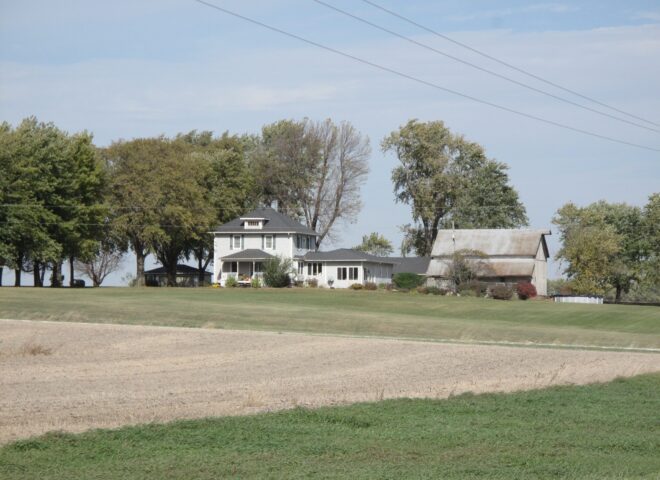
Farmsteads in Iowa can vary greatly depending on the era they were built, the type of farming they supported, and the region of the state in which they are located.
Some key characteristics of historic farmsteads in Iowa include:
Farmhouses
Typically, the primary residence of the farming family. Early farmhouses were simple, one- or two-story structures, often with a steeply pitched roof. Over time, many farmhouses were expanded or renovated to accommodate growing families or to incorporate new architectural styles.
Barns
The barn was often the centerpiece of the farmstead, serving multiple purposes including housing livestock, storing hay, and providing space for farm equipment. The design of barns in Iowa can be distinctive, often showcasing gabled roofs, cupolas, and large doors. Over time, barns evolved, with some becoming more specialized for different types of farming (e.g., dairy barns, hog barns, or grain storage barns).
Fencing and Landscaping
Many farmsteads were designed with functional landscaping such as fenced fields for livestock and areas for growing crops. While early farmsteads had practical landscaping, later farmsteads often had ornamental gardens and flowerbeds, particularly in the early-to-mid 20th century.
Outbuildings
These are smaller structures on the property that serve various purposes, such as sheds, chicken coops, smokehouses, or workshops. Some farmsteads also had grain silos, milk houses, and horse stables.
Silos
Particularly important for dairy and grain farms, silos were essential for storing feed and crops. The iconic round concrete silos that dot Iowa’s countryside were built throughout the 20th century, as mechanized farming grew and larger harvests required more storage.
Windmills
In some parts of Iowa, windmills were used to pump water for both domestic use and livestock. These windmills were often important for sustainability in areas with limited access to water.
Historically, farmsteads in Iowa were the foundation of the state’s agricultural economy. Iowa is one of the leading states in corn, soybean, and pork production, and farmsteads were at the heart of this agricultural activity. The state’s development into an agricultural powerhouse was driven by family-operated farmsteads, which allowed for the production and processing of crops and livestock. Iowa farmsteads also represent the evolution of farming techniques and equipment. From early hand tools and horse-drawn plows to modern machinery, farmsteads have adapted to the changing needs of farming technology and agricultural methods.
In recent years, many historic farmsteads in Iowa face threats from urban sprawl, land consolidation, and deterioration. As farms become larger and more mechanized, many smaller farmsteads are abandoned or neglected. However, there has been a growing interest in preserving these historical sites, both for their cultural significance and as a way to remember Iowa’s agricultural roots.
Farmsteads are deeply embedded in the history of Iowa, representing both the hard work and the cultural traditions of generations of Iowans. They not only tell the story of Iowa’s agricultural roots but also provide a tangible link to the past, illustrating how people have shaped and been shaped by the land. As the state continues to evolve, preserving these farmsteads remains an important part of maintaining Iowa’s unique cultural and historical identity.
Barns in Iowa are iconic structures on historic farmsteads that reflect the state’s deep agricultural heritage. They are not only functional buildings but also important cultural landmarks that tell the story of farming practices, the evolution of agriculture, and the communities that rely on them. From the early pioneer barns to the modern agribusiness facilities, Iowa barns offer insight into the state’s agricultural history. Additional information on barns is available here.