
How to Research a Historic Property
While there are many sources of information to consult, the following steps and resources provide a general guideline for researching historic buildings and sites within Iowa’s communities and counties. This approach helps ensure a thorough investigation into the property’s history, architectural significance, and historical context by using a combination of local, state, and national tools. Whether you’re exploring a building’s past for preservation, documentation, or personal interest, these resources offer a solid starting point.
As research is completed, be aware that street addresses were renumbered or shifted over time in many towns. These changes may have occurred due to urban development or efforts to standardize address systems. As a result, a property’s historic address may differ from its current one, even though the building itself remains in the same location. When using sources like city directories or Sanborn Fire Insurance Maps, it’s important to cross-reference with multiple records and consider the possibility of address changes.
Gather Basic Information about the Property
- Address: Current street number and street name for the property.
- Assessor information: Most counties in Iowa have assessor records online at https://beacon.schneidercorp.com or another website, which list the current property owner, value of the property, basic information on the property, and the legal description of the property. While the date of construction is typically included, it is often a general estimate, particularly for older properties, with “1900” used as a default value for an “old” property. The legal description is useful for researching property owners. It is the physical location described by the legal platting of the property, such as Lot 1 in Block 15 or the northeast quarter of Section 11 in Township 2W, Range 1N.
Check the National and State Records
- Properties listed in the National Register of Historic Places (NRHP), as well as many nomination forms, can be found at: https://www.nps.gov/subjects/nationalregister/database-research.htm
- Properties included in the state inventory in Iowa can be found at: https://shporecords.opportunityiowa.gov/.
- Information on these properties in Iowa can be requested by contacting the State Historic Preservation Office (SHPO) through this process: https://opportunityiowa.gov/community/historic-preservation/historic-places-landmarks/historic-archeological-inventory
Identify Previous Property Owners
- Abstract: The current property owner likely has access to the abstract for the property, which traces the previous owners of the property. While the abstract will not provide a date of construction for a property, it provides names of previous owners and may provide clues in descriptions of the property transfers and purchase prices.
- Auditor’s Office: This office typically has transfer books that summarize sales of property, often organized by location (legal description). These books can be utilized to trace previous owners of a property using a legal description when an abstract is not available. The books provide basic information about a transfer of the property, including grantor (seller) name, grantee (purchaser) name, date of sale, legal description
- Recorder’s Office: This office has deed records that provide further information on the sale of the property. Grantor (seller) and grantee (purchaser) indices can be utilized to trace chain of ownership by working back in time, if transfer books are not available.
- County Assessor’s Office: This office can provide property tax records and assessor books, which can be utilized to see increases in value of a property around the time of construction or significant remodeling.
Check Local Government Records
- City Hall: Some cities or counties have historic preservation commissions that keep files about historic properties in the area. They might have copies of site inventory forms or survey reports that have been completed for properties in the city.
- Building Permits: Depending on the location, you might find records of permits issued by the local building department extending back decades. These records are organized by address, though be aware that addresses may have shifted slightly over time.
Search for Sanborn Fire Insurance Maps and Historic Maps
- Sanborn Maps: These maps are incredibly useful for researching old properties. Sanborn fire insurance maps are large-scale, detailed maps of U.S. cities and towns created from the late 19th to the mid-20th century to help insurance companies assess fire risk. They include information on building size, shape, construction materials, use, address, and roof types, as well as street names, property lines, and locations of water mains and fire hydrants. Many of these maps have been digitized through the Library of Congress website at: https://www.loc.gov/collections/sanborn-maps/about-this-collection
- County Atlases: Many local libraries and historical societies in Iowa have historic county atlases, often created in the late 19th or early 20th centuries. These atlases include plats of cities that sometimes indicate buildings and include detailed maps of rural land ownership, showing who owned a property at that time. Many of these maps have also been digitized and are available through the University of Iowa Map Collection at https://digital.lib.uiowa.edu/atlases
- Iowa Geographic Map Server: This site is an online collection of Iowa geographic map data. Historical topographical maps, aerial photographs, and other geographic maps are available through this site at https://ortho.gis.iastate.edu. The site was developed by the Iowa State University Geographic Information Systems Support and Research Facility in cooperation with the Iowa Department of Natural Resources, the USDA Natural Resources Conservation Service, and the Massachusetts Institute of Technology.
- Historic maps: Other historic maps may be available at local libraries or historical societies that show the development of a community or neighborhood over time.
Research Local, County, and State Directories
- City directories were published annually for many larger communities, or periodically for smaller communities, starting in the middle of the 19th century and extending through the 20th century. These directories are valuable tools for research as they list residents, businesses, organizations, and institutions in a particular city or town. They are organized alphabetically by name and also organized by street address starting in the late 19th or early 20th century. Additional information on people is included in these directories, such as occupation, business, and family members. City directories are found in printed form at local libraries or historical societies, with some digitized city directories found on local library websites. Other digitized directories for some cities and some years can be found online in sources requiring a subscription, such as Ancestry.com and HeritageQuest. Remember that addresses may have slightly shifted or completely been renumbered at some point in history.
- County directories were published more infrequently than city directories, but they made an effort to include all residents in a county. Short descriptions of communities in the county are often included, along with businesses, institutions, organizations, and residents. They are typically found in printed form at local libraries or historical societies.
- The Iowa State Gazetteer and Business Directory (and similar titles) was produced in the late 19th and early 20th centuries, listing towns, counties, businesses, railroads, post‑offices, population, etc. They often combine short histories of each county/town, summary of features (railroads, rivers, mineral resources, etc.), and business listings (stores, mills, hotels). These volumes are found in state archival collections, with some digitized and available online through Google Books, HathiTrust, and Ancestry.com.
Examine Historic Newspapers
- Old newspapers can potentially yield a wealth of information about a property, ranging from information on its construction, remodeling, or residents that lived there.
- Some newspapers included a recap of building construction in a town at the end of the year or at the start of the new year.
- Newspapers also provide additional information about residents of properties, including obituaries on residents or articles connected to their occupation or activities in town.
- Historic newspapers are found on microfilm in many local libraries, with limited editions available in print form for some communities.
- Digitization of historic newspapers has made them significantly more accessible for research, allowing users to quickly search for names, addresses, events, and other details that were once buried in printed pages. With keyword search capabilities, researchers can efficiently uncover valuable context about a historic property. Digital archives with various newspapers include Newspaper.com and NewspaperArchive.com. Many small communities have digitized newspapers through Advantage Archives, and they can be found at CommunityHistoryArchives.com and through local library or historical society websites.
Explore Further Information on Residents and Owners
- Census records are valuable tools for researching historic properties, people, and communities. They provide information on individuals – such as names, ages, occupations, birthplaces, and relationships – as well as housing details like ownership status, value, and address. Researchers can use census data to track who lived in a building over time, understand the social and economic context of a neighborhood, and identify broader demographic trends. Census records are available at libraries and historical societies. Online sources for census records include Ancestry.com and HeritageQuest.com
- County histories are published books that provide detailed historical accounts of a specific county, often focusing on its settlement, development, prominent individuals, institutions, and landmarks. They were especially popular in the late 19th and early 20th centuries and are valuable resources for historical and genealogical research. These histories are available in print form at local libraries and historical societies. Many county histories are also available online through sites such as Google Books, HathiTrust, and the InternetArchive.
- City histories are published works that document the development, people, businesses, and events of a specific city, often in great detail. Like county histories, they are important resources for researching local history, genealogy, and historic properties. City histories were often published around a significant date in the city, such as the centennial of the founding. These histories are found in print form at local libraries and historical societies.
Investigate the Architecture
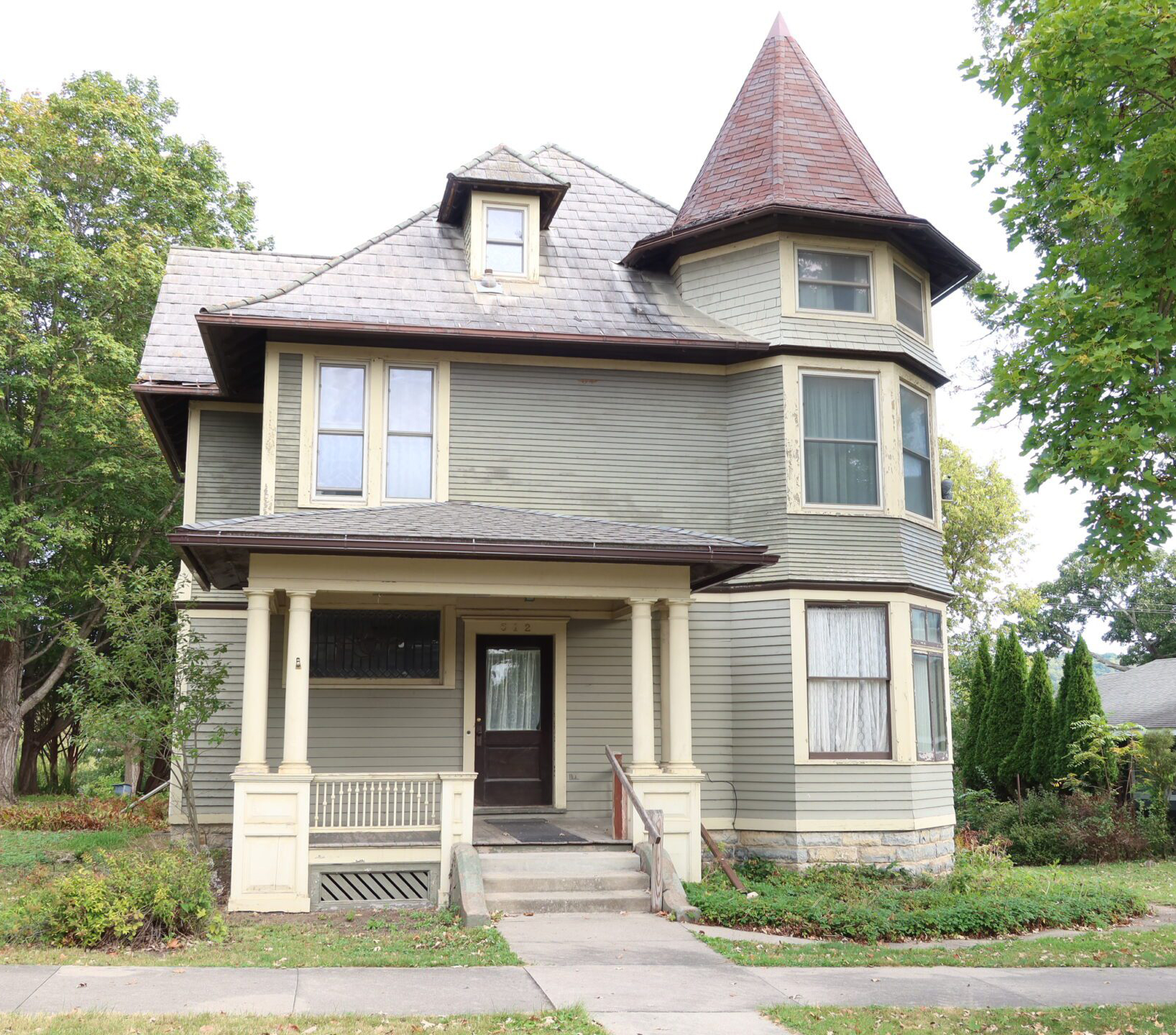
- The architectural style and features of the property can give clues about its date of construction and perhaps an architect.
- Start by looking at the building’s features (roof form, window type, ornament, massing) and compare them with architectural style guides.
- Once you identify a probable style (e.g., Queen Anne, Colonial Revival, Art Deco), use the guide to check when that style was popular and whether it fits the building’s context.
- Identify the historic materials found on the property, which can provide clues to the original construction date and potential dates of modifications to the property
Visit Local Historical Societies and Libraries
- Historical Societies: They often hold archives, photographs, and other records that may not be available online. They may also have experts who can provide insights into the property.
- Local Libraries: Many libraries have local history sections with old newspapers, county histories, city directories, maps, and even personal stories that might mention the property.
Talk to People
- Find current or previous neighbors or long-time local residents who may know stories, changes, and important historical details that aren’t documented anywhere else.
- Identify descendants of earlier property owners or residents to learn information about families that lived in the house, changes to the property, and historic photographs that show the building.
- Look for oral history interviews in local libraries or historical societies to find information about families, specific local history topics, or buildings in the community.
